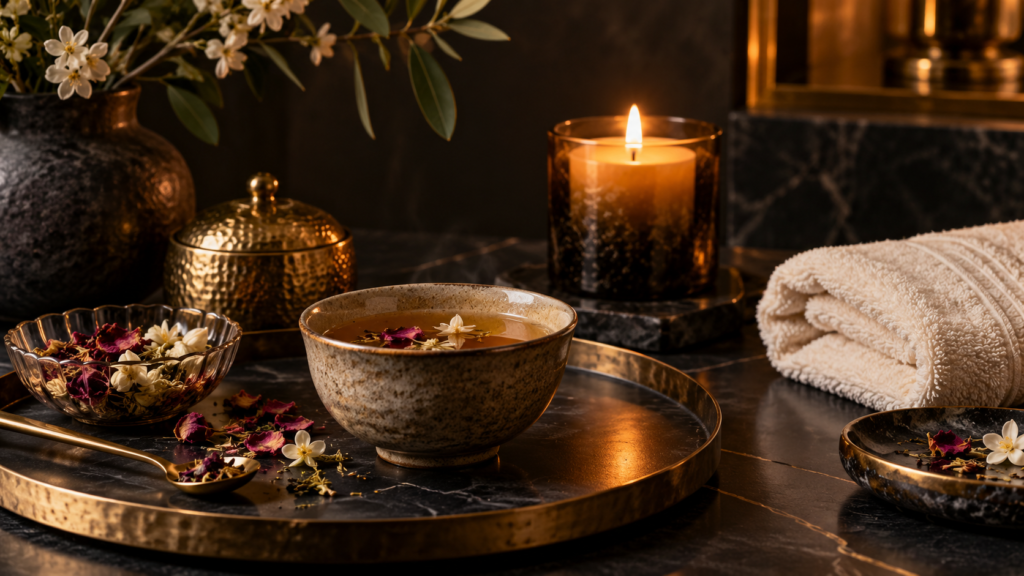
Luxury is not always loud. Often, it arrives quietly: in the first sip of a warm drink, in the moment you smooth oil through your hair, in the calm that follows when the world finally softens at the edges. The most memorable rituals are rarely complicated. They are simply repeated with care.
That is the beauty of everyday rituals. They turn routine into meaning. They give structure to busy days, calm to noisy evenings and beauty to moments that would otherwise pass unnoticed. When practiced consistently, they become less about “doing more” and more about feeling present.
Why rituals matter
Unlike habits that are driven by speed and efficiency, rituals invite attention. They encourage us to notice texture, fragrance, light, temperature and mood. A rushed shower cleanses the body. A thoughtful bathing ritual can reset the mind. A quick perfume application finishes an outfit. A carefully chosen attar can become part of how a memory is made.
Rituals matter because they bring intention back to the everyday. They help us pause before the day begins or close it gently when the day ends. In a world that celebrates urgency, rituals remind us that there is beauty in unhurried moments.
Start with one moment, not ten
If the idea of a “lifestyle ritual” feels overwhelming, keep it very small. Choose one part of your day and make it more deliberate. It could be:
- lighting incense before evening prayer, reading or quiet reflection,
- taking two extra minutes to massage shampoo into the scalp instead of rushing,
- using a face cream slowly rather than applying it absentmindedly,
- pouring tea into a favourite cup and drinking it without multitasking.
When one gentle practice becomes natural, another can follow. The goal is not to build a perfectly aesthetic life. The goal is to create a life that feels calmer, more grounded and more beautiful to live inside.
The five elements of a memorable ritual
1. Atmosphere
Atmosphere is often what separates a routine from a ritual. A clean counter, a softly folded towel, a little fragrance in the air or warm lighting can completely change how a moment feels.
2. Repetition
Rituals become comforting because they return. There is reassurance in a familiar sequence. The same hair mask on a Sunday. The same attar before stepping out. The same incense after sunset. Repetition creates emotional texture.
3. Sensory detail
Texture, scent and touch are powerful anchors. The coolness of a cream jar, the earthy fragrance of henna, the clean foam of shampoo and the gentle trail of attar all make the moment feel real and embodied.
4. Intention
Even a 3-minute ritual feels different when you are conscious of it. Instead of “I need to wash my hair,” the mindset becomes “I’m taking a few minutes to care for myself.” That change matters.
5. Simplicity
The best rituals are sustainable. They fit naturally into life. A ritual that needs too many tools or too much time will likely disappear. Gentle simplicity is what allows it to stay.
“A good ritual doesn’t ask you to escape your life. It teaches you how to return to it more gently.”
Morning rituals and evening rituals
Morning rituals tend to create clarity, while evening rituals create release. In the morning, you may want freshness, direction and steadiness. A simple shampoo, a light fragrance or a quick skincare moment can help you begin feeling collected. Evenings often ask for softness. That is where warm water, incense, slower skincare and quiet fragrance feel especially comforting.
There is no perfect formula. Some people feel restored by a long bathing ritual. Others need a quiet cup of tea, one candle and ten minutes without a screen. The best ritual is the one you actually look forward to.
Creating a ritual corner at home
You do not need a large vanity or a perfectly designed room. A tray, a shelf, a bathroom ledge or a small corner of a dresser is enough. Keep a few items there that invite slowness: a favourite comb, a folded cloth, your chosen hair or skincare essentials, a fragrance you love or incense for the evening.
When care items have a place and are arranged thoughtfully, you are more likely to use them consistently. A ritual corner becomes a visual cue: this is where I return to myself.
Rituals are also emotional
Many rituals connect us to memory. The fragrance of rose may remind someone of family gatherings. The scent of bakhoor may recall festive evenings. A herbal hair routine may carry the comfort of practices handed down through generations. That emotional layer is part of what makes ritual so powerful. It is never only about the product. It is about the feeling it creates.
A simple SAFA-inspired ritual to try
- Begin by clearing your counter or bedside space.
- Light incense or create a calm atmosphere.
- Wash or refresh with intention rather than hurry.
- Apply skincare slowly, allowing each step to settle.
- Finish with a soft fragrance or a warm drink.
It takes only a few minutes, yet the mood it creates can linger far longer.